
Skin tags are one of the most common reasons clients visit us for blemish removal. They're harmless, but they can catch on jewellery, rub against collars and bra straps, or simply knock your confidence. In this guide, we answer the questions people ask most: why skin tags appear, whether over-the-counter kits work, and how to remove skin tags safely.
What are skin tags?
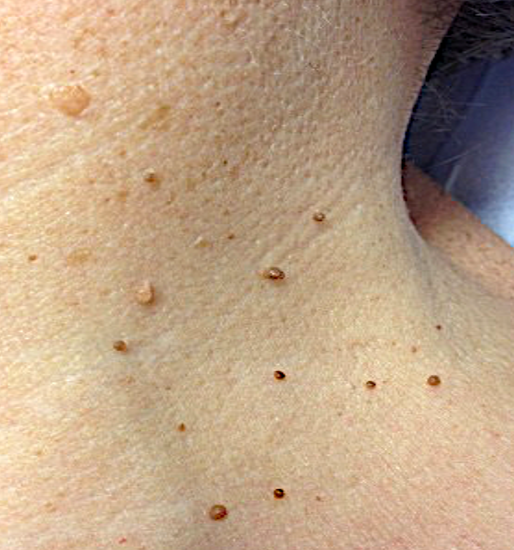
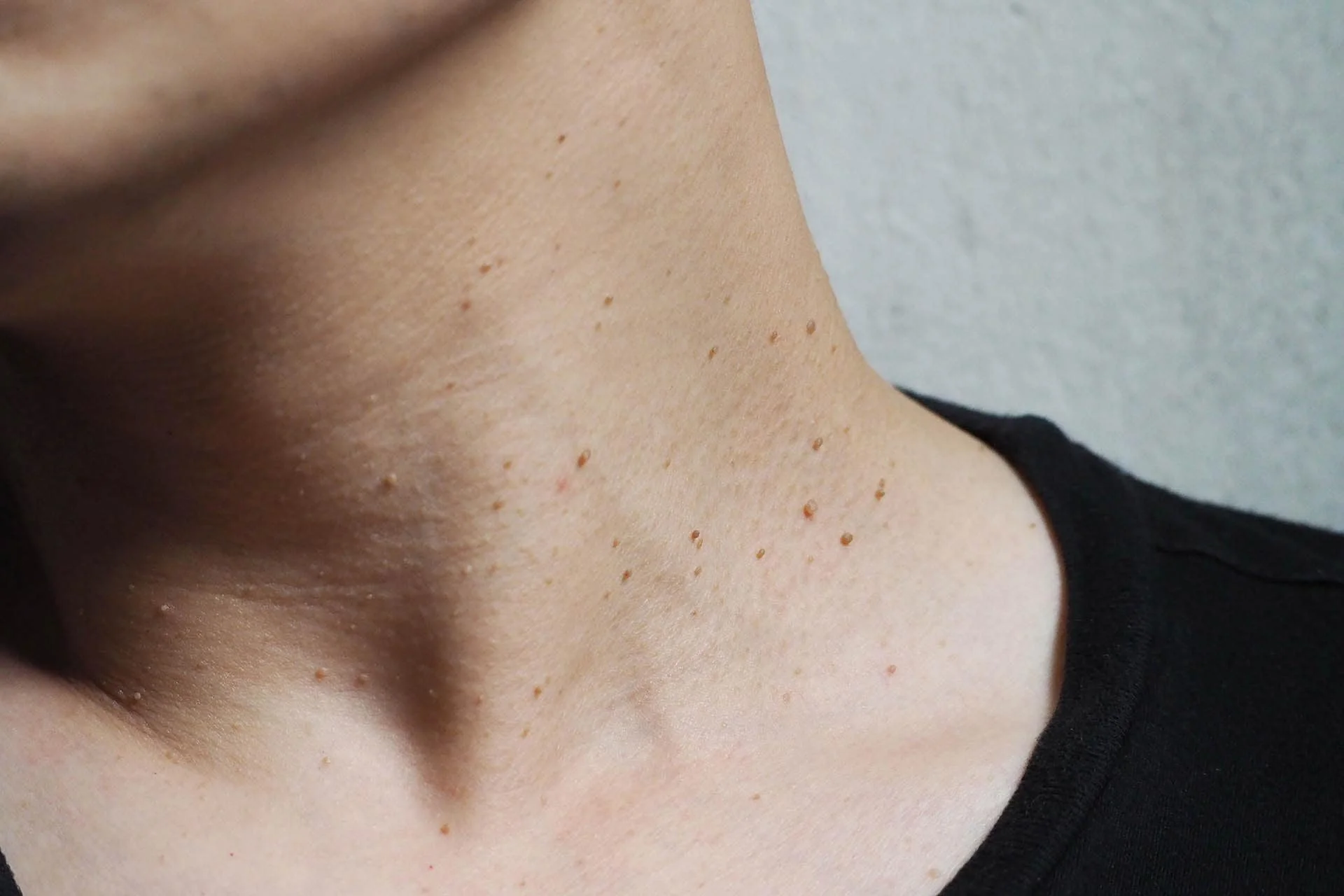
Skin tags (also called acrochordons) are small, soft growths that hang from the skin, often on a thin stalk. They're made of loose collagen fibres and blood vessels surrounded by skin, and they're benign. Most are skin coloured or slightly darker, and they range from around 2mm to 5cm.
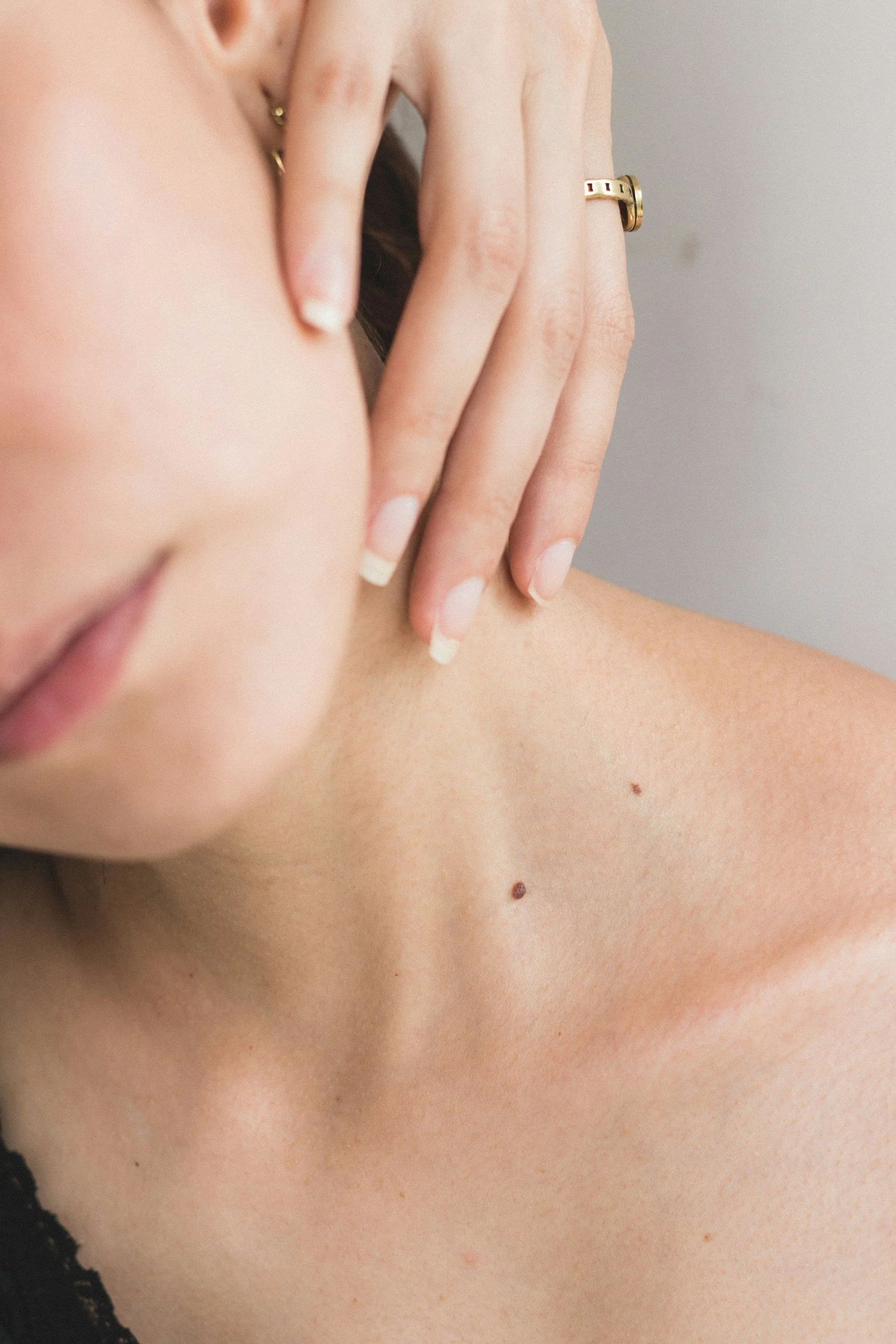
They usually appear where skin folds or rubs, including the neck, armpits, eyelids, under the breasts and around the groin. You might have a single skin tag or a cluster of them.
Skin tags are often confused with warts and moles. Unlike warts, skin tags are smooth, soft and not contagious. Unlike most moles, they hang from the skin rather than sitting flat against it.
What causes skin tags to develop?
The exact cause of skin tags isn't fully understood, but friction is the most common trigger. Skin tags tend to form where skin rubs against skin or clothing. Weight, hormonal changes, insulin resistance and age all increase the likelihood of developing them, and some people develop skin tags for no obvious reason.
The main factors linked to skin tags include:
Friction and skin folds: areas such as the neck, underarms and groin experience constant rubbing, which is why skin tags cluster there.
Weight: carrying extra weight creates more skin folds and more friction.
Type 2 diabetes and insulin resistance: insulin resistance is thought to encourage skin tag growth, so people with type 2 diabetes are more likely to develop them.
Pregnancy: hormonal changes during pregnancy can trigger new skin tags.
Age: skin tags become more common from middle age onwards.
Family history: skin tags can run in families.
Can you prevent skin tags?
You can't fully prevent skin tags, but reducing friction helps. Looser clothing around the neck and underarms, and keeping skin folds clean and dry, may reduce new growth in areas prone to rubbing.
When should you see a GP?
See your GP if a skin tag grows, becomes painful, bleeds, or if you suddenly develop lots of skin tags. Any growth that changes in colour, shape or texture needs checking by a medical professional before cosmetic removal.
What are effective over-the-counter skin tag removal options?
Pharmacies sell freezing kits, banding devices and topical solutions for skin tags. These can work on small tags with a narrow stalk, but results vary. Home freezing kits don't reach clinical temperatures, and the NHS advises against removing a skin tag yourself unless a GP recommends it, because of the risk of infection, bleeding and scarring.
Here's how the main over-the-counter options compare:
Home freezing kits
These apply a cold spray or applicator to the base of the tag. They work on the same principle as professional cryotherapy, but they're much less cold and far less precise. Larger or thicker tags often don't freeze fully, so they may not drop off, and the surrounding skin can blister.
Banding (ligation) devices
Banding devices place a small band around the base of the skin tag to cut off its blood supply, so it falls off after several days. They only suit tags with a clear stalk, and they can be uncomfortable or difficult to position.
Creams and topical solutions
Some products dry out the skin tag over time. Results are inconsistent, and active ingredients can irritate the healthy skin around the tag.
Home remedies to avoid
Tying thread around a tag, cutting it off, or applying tea tree oil, apple cider vinegar or other home remedies isn't recommended. Cutting a skin tag can cause heavy bleeding, and acidic remedies can burn healthy skin.
The risks of removing skin tags at home:
Infection and bleeding, particularly with larger tags
Scarring or skin darkening (hyperpigmentation), which is more likely on darker skin tones
Incomplete removal, leading to irritation, inflammation or regrowth
Misdiagnosis: a growth that looks like a skin tag could be a wart, mole or something that needs medical attention
Over-the-counter kits aren't suitable for skin tags near the eyes, on the genitals, on large or bleeding tags, or if you're unsure what the growth is. If you have diabetes or poor circulation, check the product label and speak to your GP or pharmacist first.
How to remove skin tags
The safest way to remove skin tags is with professional treatment following a skin assessment. Clinical options include cryotherapy (freezing), electrolysis or cautery (heat) and surgical excision. At SKINLAB, we use CryoPen cryotherapy and Sterex electrolysis to remove skin tags quickly, precisely and with little to no downtime.
CryoPen cryotherapy
CryoPen cryotherapy releases a controlled jet of nitrous oxide at −89°C directly onto the skin tag. The extreme cold destroys the unwanted tissue without harming the surrounding skin, and the tag darkens and falls away naturally over the following days. Each skin tag takes only seconds to treat, and the precision tip allows us to target even very small tags.
Sterex electrolysis
Sterex electrolysis uses a fine probe to deliver a controlled current that cauterises the skin tag at its base. It offers pinpoint control, which makes it ideal for small tags and delicate areas.
Surgical excision
Larger skin tags may need surgical removal with a scalpel or surgical scissors, carried out by a doctor. If a skin tag isn't suitable for treatment in clinic, we'll advise you to see your GP.
What happens at your skin tag removal appointment?
Every treatment starts with a consultation. We assess each growth to confirm it's a skin tag, choose the right method for its size and location, and explain what to expect. Anything that needs medical review, we refer to your GP before treating.
Most clients describe the sensation as a brief sting or cold pinch. You can return to normal activities straight away. Keep the area clean, avoid picking any scab that forms, and protect the skin with SPF while it heals.
Do skin tags come back after removal?
Once a skin tag is removed, it doesn't usually return. New skin tags can still form in the same areas, particularly where friction continues.
Skin tag removal FAQs
-
No. Skin tags are benign and don't turn into skin cancer. Most people have them removed because they snag on clothing or jewellery, become irritated, or affect their confidence.
-
Occasionally. If a skin tag twists and loses its blood supply, it can shrivel and drop off. Most skin tags stay unless they're treated.
-
Usually not. The NHS classes skin tag removal as cosmetic, so most people pay for private treatment. Your GP can check a growth if you're concerned about it.
-
No. Skin tags don't spread from person to person or across your body. Warts, which are caused by a virus, are contagious.
-
Most skin tags clear after a single treatment. Larger tags occasionally need a second session.
-
Never treat skin tags near the eyes at home. In clinic, your practitioner will assess whether the location is suitable during your consultation.
-
Skin tag removal at SKINLAB starts from £25. We'll confirm your treatment cost at consultation, based on the number and size of tags.
Skin tag removal in Deal, Kent
At SKINLAB, our blemish removal treatments are led by Vicky Brailsford, our lead therapist and co-owner, who specialises in CryoPen cryotherapy and Sterex electrolysis. Every treatment is consultation-led, so you'll always know which method suits your skin and what results to expect.
If skin tags are catching, rubbing or simply bothering you, [book a blemish removal consultation] at our clinic in Deal, Kent.