

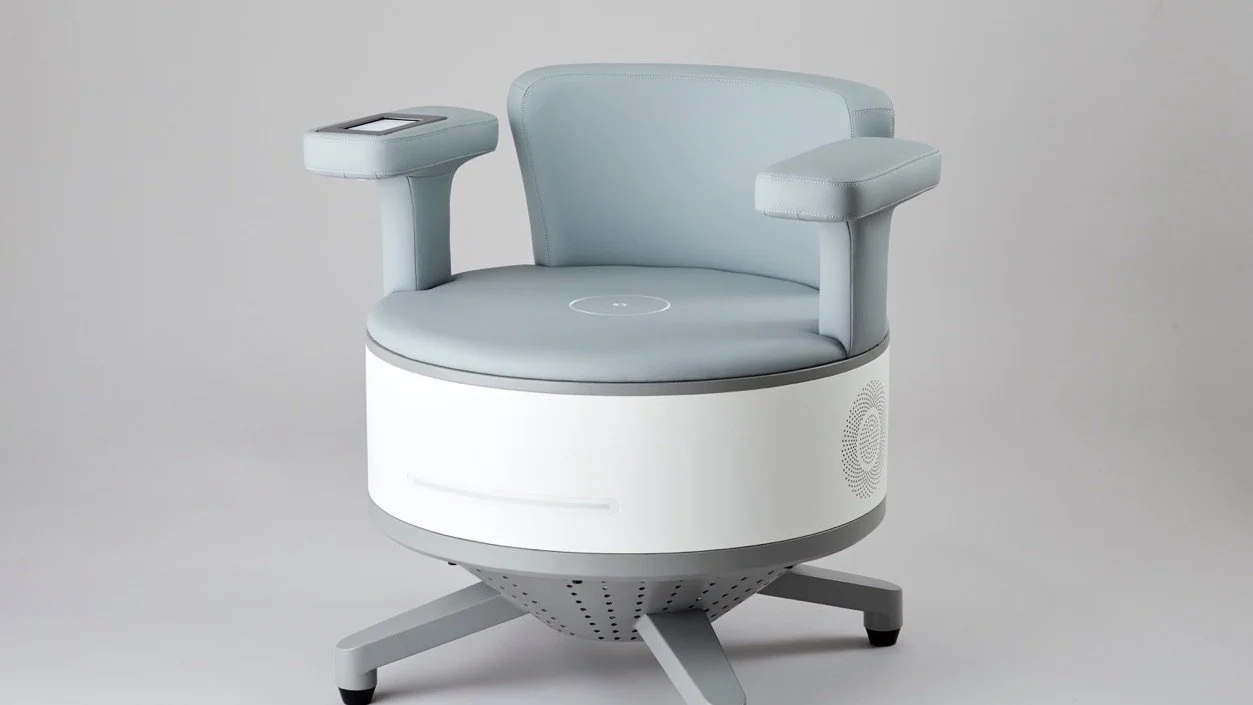
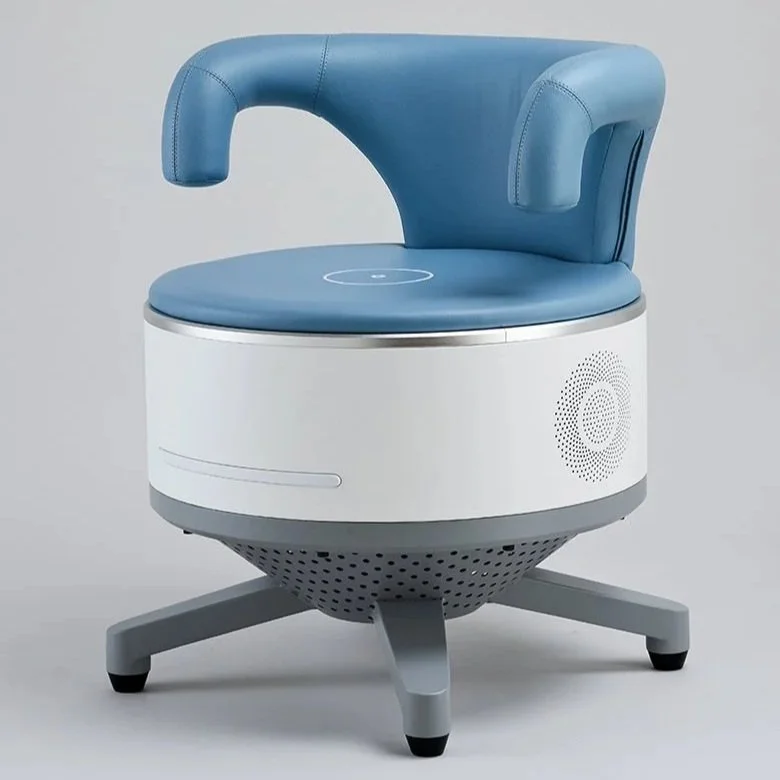
If you've searched for Emsella in Deal, you're looking for a chair treatment that strengthens the pelvic floor while you sit fully clothed. Emsella® is one brand of pelvic floor chair. At SKINLAB, on The Strand in Deal, we use the Tesla Pelvic Floor Chair, which works on the same principle: a magnetic field that triggers thousands of deep pelvic floor muscle contractions in a 30-minute session.
Leaking when you cough, laugh, run or jump on the trampoline with the kids is common, and it isn't something you have to put up with. This guide explains how the Tesla Chair compares with Emsella, who it can help, what a course costs in Deal, and the honest questions worth asking before you book.
Emsella vs Tesla Chair: what's the difference?
The short answer is the brand. Emsella® is a pelvic floor chair made by BTL, and its technology is marketed as HIFEM (high-intensity focused electromagnetic). The Tesla Pelvic Floor Chair uses Functional Magnetic Stimulation (FMS). Both rely on the same physics: a changing magnetic field passes through your clothes and stimulates the nerves that control the pelvic floor, so the muscles contract far more deeply than you could manage with exercises alone.
The "Tesla" in the name refers to the tesla, the scientific unit used to measure magnetic field strength. It has nothing to do with the car company.
For you, the experience is very similar: you sit, stay dressed, feel strong tapping contractions, and carry on with your day. What matters more than the brand is a proper consultation, a course planned around your symptoms, and a clinic that will tell you honestly if the chair isn't the right first step.
How the Tesla Pelvic Floor Chair works
Your pelvic floor is a sling of muscles that supports your bladder, bowel and, in women, the womb. When those muscles weaken, after pregnancy, through menopause, with age or after surgery, they can't close off the bladder as firmly, and leaks happen.
The Tesla Chair delivers a pulsing magnetic field through the seat. This stimulates the nerves supplying the pelvic floor, and the muscles respond with thousands of strong, involuntary contractions in a single 30-minute session. These are often described as supramaximal contractions, meaning they go beyond what most people can achieve with a voluntary squeeze.
Many people find pelvic floor exercises (Kegels) hard to do correctly, or hard to keep up. The chair takes the guesswork out of finding the right muscles and works them consistently, which is why it appeals to people who've tried exercises at home without much change. There's no skin contact, no internal device and no need to undress.
Who can the Tesla Chair help?
The Tesla Chair is suitable for adult women and men with pelvic floor weakness. People most often come to us for:
Stress incontinence: leaking when you cough, sneeze, laugh, lift or exercise
Urge incontinence and overactive bladder: a sudden, urgent need to go, or going more often than you'd like
Mixed incontinence: a combination of both
Postnatal recovery: rebuilding strength after pregnancy and birth, once you've had your postnatal check
Menopause: when falling oestrogen levels leave the pelvic floor weaker than it was
Core and lower back support: the pelvic floor works with your deep core muscles, so strengthening one supports the other
Men's pelvic health: including leaks after prostate treatment, where your consultant is happy for you to try it
Research into magnetic chair treatment is growing. A 2022 study in the Journal of Clinical Medicine followed women treated on a 3 Tesla FMS chair for stress incontinence or overactive bladder and found it may be an effective option for both. Results vary from person to person, which is why every plan at SKINLAB starts with a consultation.


What a session feels like and how many you'll need
Consultation. We talk through your symptoms, goals and medical history to check the chair is right for you. If you'd rather start with a chat, a free telephone consultation is available.
Your session. You sit in the chair, fully clothed, for around 30 minutes. Wear comfortable clothes without metal zips or belts. You'll feel a strong tapping or contracting sensation through the pelvic area. It's intense rather than painful, and the intensity is adjusted to suit you.
Your course. Sessions are usually booked twice a week, with a course of six to ten treatments depending on your needs.
Afterwards. There's no downtime, so you can go straight back to work, the school run or a walk along the seafront.
Results build gradually. Some clients notice better bladder control within the first few sessions, while for others the change comes later in the course. Like any muscle, the pelvic floor needs ongoing work, so monthly or bi-monthly maintenance sessions help you hold on to your progress.
The honest bit: when the chair is, and isn't, the right step
We'd rather you get the right care than book a treatment that isn't right for you. A few things worth knowing:
See your GP first if symptoms are new or changing. Pain, blood in your urine, repeated urine infections or a sudden change in bladder habits all need a medical check.
Pelvic floor exercises still matter. On the NHS, supervised pelvic floor training with a specialist physiotherapist is the usual first step for stress and mixed incontinence. The Tesla Chair can sit alongside this, and suits people who want extra support or who struggle to engage the right muscles on their own.
It isn't for everyone. The chair isn't suitable if you have a pacemaker or other implanted electronic device, metal implants in the pelvis or lower back, are pregnant, or have certain heart or neurological conditions. If you have an IUD (coil), we'll discuss this at consultation.
A full medical history is taken before any treatment, and we'll always tell you if the chair isn't the right fit.
Frequently Asked Questions
-
SKINLAB in Deal offers the Tesla Pelvic Floor Chair, which works in the same way as the Emsella® chair: a magnetic field strengthens the pelvic floor while you sit fully clothed. We don't offer the Emsella brand itself.
-
They're different brands of the same type of treatment. Both use magnetic energy to trigger deep pelvic floor contractions, both take around 30 minutes, and neither involves undressing or internal probes.
-
Research into magnetic chair treatment shows promising results for stress incontinence and overactive bladder, and many clients notice better bladder control over their course. It doesn't work for everyone, which is why we assess your symptoms at consultation first.
-
No. You'll feel strong tapping or contracting through the pelvic floor, which can feel unusual at first. The intensity is adjusted to what's comfortable for you.
-
No. You stay fully clothed throughout. Comfortable clothing without metal zips, buttons or belts works best.
-
Most people have six to ten sessions, twice a week. Maintenance sessions every month or two help you keep your results.
-
Results depend on your starting point and how you maintain them. Like any muscle, the pelvic floor weakens again without ongoing work, so maintenance sessions and regular pelvic floor exercises help results last.
-
Wait until you've had your postnatal check and been cleared for exercise. If you've had a caesarean or a difficult birth, we'll talk through timing at your consultation.
-
Yes. Men use it for pelvic floor weakness and bladder leaks, including after prostate treatment where their consultant agrees it's appropriate.
-
Strengthening the pelvic floor can support mild prolapse symptoms. If you've been diagnosed with a prolapse, or think you might have one, speak to your GP before booking so it can be properly assessed.
-
Magnetic chair treatment isn't routinely offered on the NHS, so it's usually a private treatment. The NHS does offer pelvic floor physiotherapy, which can work well alongside the chair.
-
If leaks or pelvic floor weakness are affecting how you exercise, socialise or sleep, many people find a course worthwhile. It's non-invasive, has no downtime and fits around daily life. A consultation will help you decide whether it's right for you.
-
Yes. SKINLAB is at 56–57 The Strand in Deal and welcomes clients from across East Kent, including Sandwich, Dover, Walmer, Canterbury, Folkestone and Thanet. Free parking is available nearby on North Barracks Road.
Book a Tesla Chair consultation in Deal
Pelvic floor weakness is common, but you don't have to work around it. At SKINLAB, we offer honest, non-judgemental care for the parts of health that often go unspoken, and the Tesla Chair is a discreet way to start.
Read more about the Tesla Pelvic Floor Chair, or book a free telephone consultation and we'll talk through whether it's right for you.
EMSELLA® is a registered trademark of BTL. SKINLAB isn't affiliated with BTL and doesn't offer Emsella treatment. This article is for general information and isn't a substitute for medical advice.